
Egg Retrieval IVF Process: Preparation, Risks & What to Expect
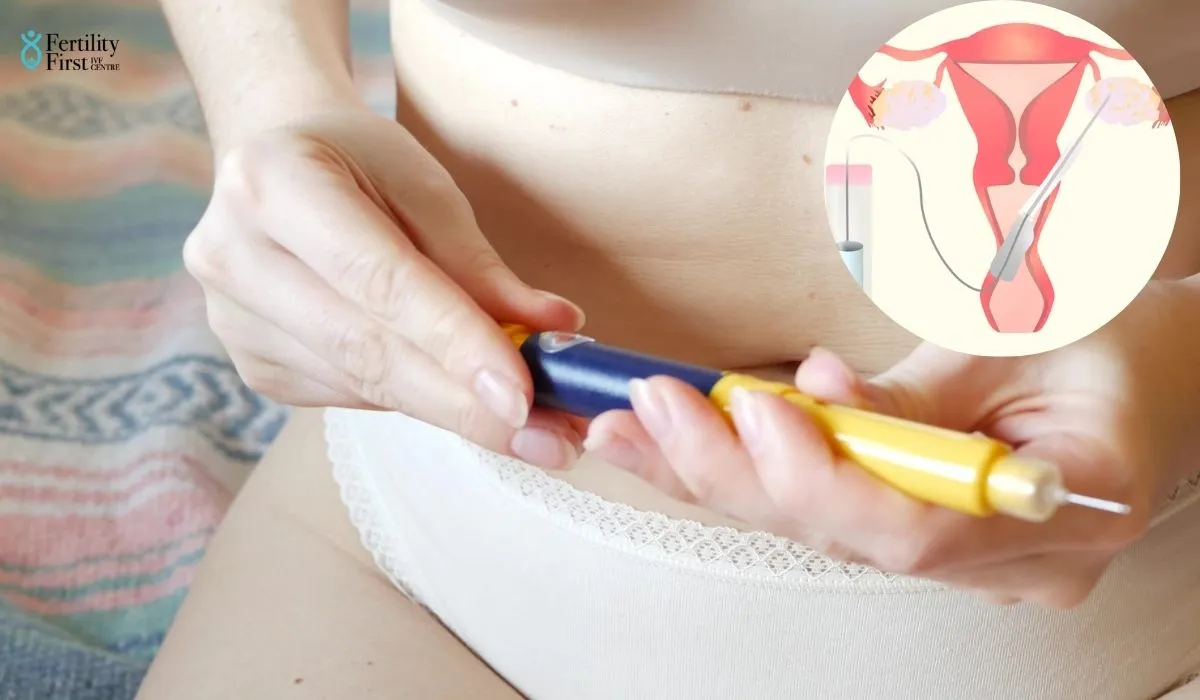
In Vitro Fertilization, known commonly as IVF, is a series of procedures done to help couples get pregnant. And one of the major steps in IVF treatment is egg collection, a minimally invasive procedure. The Egg Retrieval IVF Process plays a crucial role in collecting mature eggs that can be successfully fertilized. You will be given sedation, and eggs or oocytes will be retrieved through the vagina which are then fertilized in a laboratory.
The fertilized embryos are later placed back in your womb. This is a key step in IVF, as it allows the doctors to create embryos to achieve pregnancy. In this blog, we will be focusing on one of the five steps of IVF treatment, egg retrieval.
Overview of the IVF Process
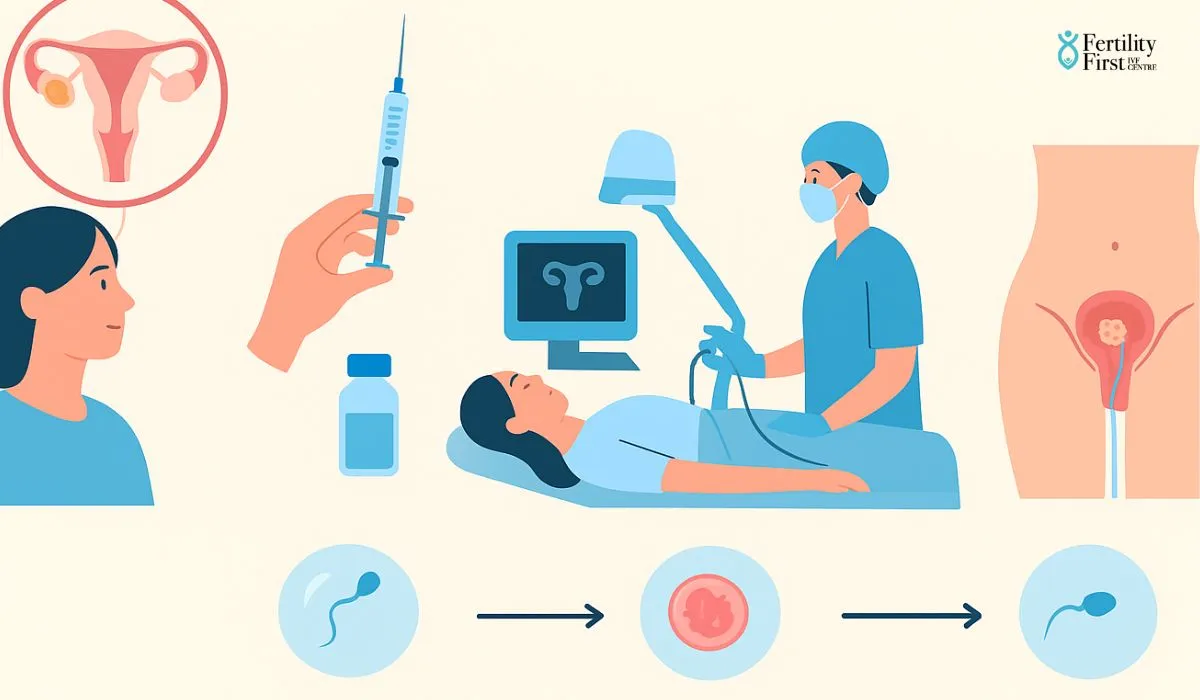
IVF, or In Vitro Fertilization, is a medical procedure used to help couples who are not able to conceive naturally. Eggs and sperm are retrieved outside the body and fused in a laboratory environment, and the embryo is placed back into the womb.
IVF treatment is divided into 5 major steps:
- You’ll be given medicines to stimulate egg production.
- The eggs are then collected from the ovaries through a minimally invasive procedure with the help of sedation. It is a transition stage between stimulation and fertilization.
- Semen is collected from your male partner, from which the sperm are extracted.
- The collected egg and sperm are fused in a laboratory dish, which is fertilized into an egg.
- Embryos are transferred to your womb.
Monitoring the hormonal process improves the chances of retrieving healthy, mature eggs.
Preparing for Egg Retrieval
Being prepared for the egg retrieval procedure helps in creating a more positive outcome. You will be given medications, orally or through injections, to produce multiple eggs that will be extracted for fusion. Certain medications to prevent premature ovulation may also be administered.
During the process of egg retrieval, your health will be monitored closely to ensure optimal health. While preparing mentally and physically for egg collection, you could:
- Increase the protein intake.
- Eat healthy food items with plenty of fruits and veggies.
- Avoid consuming food items with no nutritional quality.
- Avoid smoking and drinking.
- Consume prescribed prenatal vitamins.
Make sure you live a healthy life so that you’ll be able to produce healthy eggs.
Egg Retrieval Procedure
With the help of certain medications, the follicles reach 18 to 20mm in size, which is then retrieved for fusion with sperm. You will be advised not to consume any food items after midnight before the egg retrieval procedure.
The procedure will be performed under general anesthesia and will last anywhere from 10 to 30 minutes, depending on the number of follicles present. It will be performed under the guidance of an ultrasound with a needle introduced through the guide to aspirate the follicle and surrounding fluid in which the eggs are floating.
These aspirated eggs will be sent to the IVF laboratory, where the eggs will be isolated from the fluid and placed in an incubator. These retrieved eggs will then be fused with sperm either through direct injections or through overnight incubation with sperm.
After Egg Retrieval: Recovery and Care
It is common to experience mild pain, cramping, bloating, or spotting for a day or two after the egg retrieval procedure. Hence:
- Rest: Take a rest for a day or two and avoid any kind of exertion.
- Hydrate: Drink plenty of water and other fluids to recover faster.
- Pain Management: Use over-the-counter pain-relieving medications like acetaminophen or heating pads to reduce the cramps.
- Diet: Consume a balanced, healthy, easy-to-digest food items like bananas, toast, and soup, while avoiding processed foods.
- Constipation: To avoid constipation, stay mobile. If necessary, ask your doctor for stool softeners or other remedies.
- Vaginal Bleeding: In some cases, vaginal bleeding may occur. However, do not use tampons and instead use a sanitary pad..
- Monitor Symptoms: If you are noticing any unusual symptoms, such as severe pain, excessive bleeding, or fever, contact your doctor immediately.
What Happens to the Eggs After Retrieval
The retrieved eggs will be left with sperm to fuse in a petri dish in a laboratory. In cases where the fusion doesn’t happen naturally, an embryologist may inject the sperm into the egg through a process known as intracytoplasmic sperm injection (ICSI).
The fertilized eggs develop into embryos within 3 to 5 days of incubation. This embryo is then either transferred back to the womb or frozen through cryopreservation for future use. The embryo transfer happens 3 to 6 days after retrieval, depending on the development of the embryo.
Once you are implanted with the embryo, you’ll be under observation for a few hours before being discharged.
Egg Retrieval IVF Process: Potential Risks and Complications
Potential risks and complications of the egg retrieval procedure of IVF treatment include:
- Ovarian Hyperstimulation Syndrome: Due to overresponding to the fertility medications, the ovaries may become swollen and painful. This can cause nausea, bloating, discomfort, and even damage to the sensitive organs near to vagina.
- Bleeding and Infections: The accidental puncture of major arteries can result in abdominal bleeding. In some rare cases, due to the use of unsterile techniques, infections may happen.
- Internal Damages: Bowel injury, peritonitis, ureteral damage that results in stricture, and abscess formation in the pelvic region.
- Ovarian Torsion: Rarely, ovarian torsion may happen, in which the ovary twists around its own axis, hindering the blood flow.
Egg Retrieval IVF Process: Success Factors and Next Steps
The success of egg fertilization depends on various factors, including age, quality of both the egg and the sperm, the clinic’s expertise, etc. Once the fertilized embryos are transferred back to the uterus, you may be advised to rest, hydrate, and avoid strenuous activities. Your general health also plays a crucial role in the success rate of IVF.
Once the embryos are transferred back to the womb using a catheter, a positive pregnancy can be confirmed within 9 to 14 days through a blood or urine test. Clinical confirmation of pregnancy occurs 2 to 4 weeks after a positive result, with the help of an ultrasound scan.
Egg Retrieval IVF Process: Conclusion
Egg retrieval is a safe, crucial milestone in IVF, bringing couples one step closer to parenthood.
Frequently Asked Questions
The hormone injections, like HCG or Lupron, will be administered 36 hours prior to the egg retrieval procedure.
It is advised to avoid alcohol consumption, smoking, drug abuse, and highly exerting your body during the process of IVF.
Studies show that egg retrieval, which even requires general anesthesia, is the most painful process in IVF.
Drinking water helps your body stay hydrated and handle medications better, giving a more positive outcome during IVF treatment.
One to two days of rest are suggested after an egg retrieval procedure.
