
Side Effects of IVF You Didn’t Expect – And How to Handle Them
IVF, or In Vitro Fertilization, is a popular infertility treatment in which the eggs and sperm are fused outside the body, in a petri dish, in laboratory conditions. It is a complex and expensive procedure that comes with its own set of complications.
Although not everyone experiences any major side effects, and it is considered to be generally safe, it is crucial to learn about them if you are considering IVF treatment. This blog will take you through the common physical and emotional side effects, what ovarian hyperstimulation syndrome is, and what the potential side effects of IVF treatment are on pregnancy.
Common Physical Side Effects
Physical symptoms or side effects of IVF last for a few days to a week. You may experience mild pain or discomfort in the lower belly, at the injection site. The commonly noted side effects of IVF in women include:
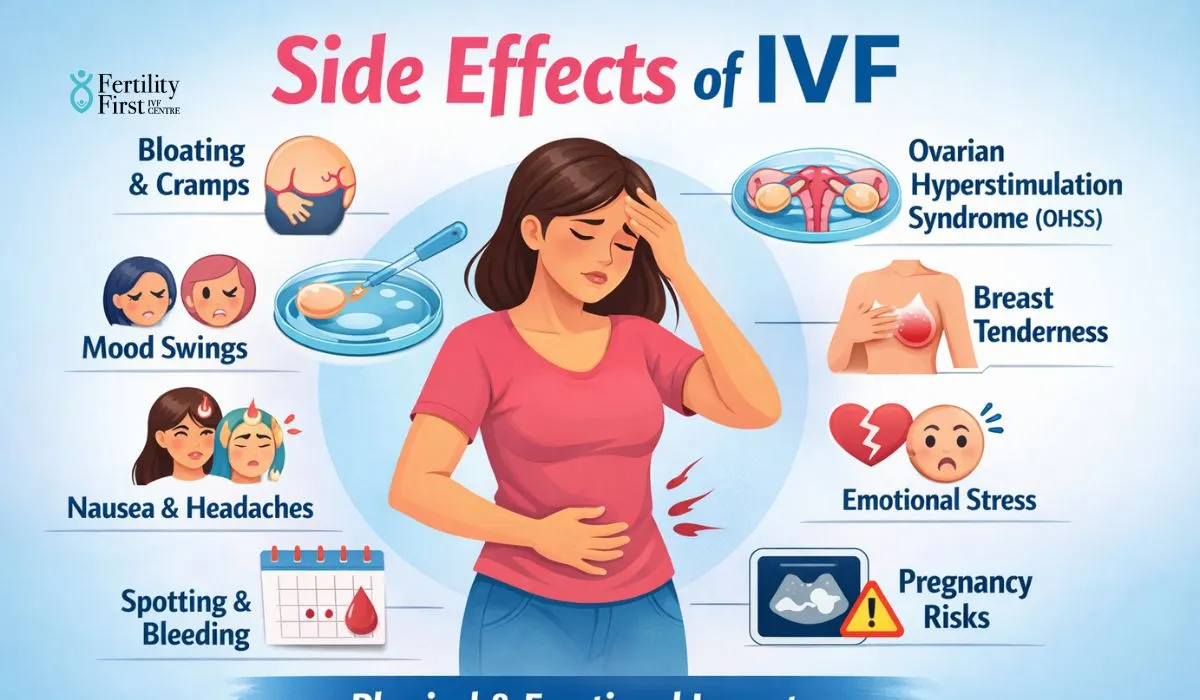
- Bloating and Cramps: Hormone shots can result in swollen and enlarged ovaries, leading to bloating, fullness, and mild cramps. Cramping is also common after egg retrieval.
- Breast Tenderness: High levels of estrogen cause the breast tissues to feel tender or swollen.
- Fatigue and Mood Swings: The fluctuations in hormone levels can cause mood swings, irritability, and fatigue.
- Headaches: The hormonal imbalance can cause headaches and sometimes hot flashes.
- Nausea and Vomiting: In some women, nausea and vomiting are seen as side effects of the medications taken to improve fertility.
- Spotting or Light Bleeding: Vaginal bleeding or spotting are common in women after the egg retrieval process.
Hormonal and Emotional Side Effects
The side effects caused by the imbalance in hormone levels typically last till the end of the IVF treatment cycle, while the emotional effects can last longer, for a week or two, especially in the cases of failed IVF.
Hormonal side effects include:
- Mood swings.
- Irritability.
- Bloating and cramping.
- Headaches.
- Nausea.
- Tenderness of the breast.
Emotional side effects include:
- Sadness and grief, especially after an unsuccessful cycle.
- Anxiety and stress.
- Frustration.
- Depression, in cases of failed treatment.
Ovarian Hyperstimulation Syndrome (OHSS)
A major complication caused by IVF treatment, Ovarian Hyperstimulation Syndrome (OHSS), is a condition in which the ovaries swell and enlarge as a result of the exaggerated responses to the stimulation of the ovaries.
From mild bloating and nausea to shortness of breath and severe abdominal pain, the symptoms of OHSS can vary, based on the complexity of the condition. The injectable hormones, especially gonadotropins, used in IVF treatment stimulate the ovaries to produce multiple eggs, which results in an overreaction to the medications.
This can cause the ovaries to enlarge and release chemicals that increase the permeability of blood vessels, leading to fluid leakage into the abdominal and chest cavities.
Procedure-Related Risks
Though considered safe, there are certain risks associated with the procedure, such as:
- Organ Damage: Injuries to the organs surrounding or next to the ovaries, like the bladder, blood vessels, or bowel, are caused by the needle inserted to retrieve the eggs.
- Infections: Pelvic infections caused during the egg retrieval or embryo transfer are uncommon. In cases of severe infections, hospitalization, antibiotic treatments, or even surgeries to remove the ovaries, uterus, or tubes might be needed.
- Ovarian Hyperstimulating Syndrome: The process of egg retrieval can leave the ovaries stimulated, leading to OHSS.
- Ovarian Torison: In extreme cases, ovarian torsion, a condition in which the ovary or fallopian tubes can twist, can cease the blood supply.
Pregnancy-Related Risks
IVF is often associated with pregnancy-related risks such as multiple pregnancies, premature birth, low birth weight, and even miscarriage.
- Multiple Pregnancies: The stimulated ovary and excess of hormones in the body can result in multiple pregnancies, which can be risky for both the mother and the baby.
- Ectopic Pregnancy: In some cases, the egg implants outside the uterus, mostly in the fallopian tube, leading to a life-threatening situation.
- Pregnancy-Related Diabetes: IVF increases the chance of pregnancy-induced high blood pressure and diabetes.
- Preterm Birth: IVF treatments sometimes result in premature birth or babies with low birth weight.
- Miscarriage: In the cases of multiple pregnancies caused by IVF, the risk of miscarriage is higher.
Long-Term or Rare Side Effects
IVF rarely has long-term side effects. Among the side effects, OHSS and ovarian torsion are some rarely occurring issues as a result of IVF treatment. Some studies show that the drugs used in fertility treatment can even result in ovarian cancer. However, proper research needs to be conducted regarding this.
Rarely, babies with birth defects, and declining maternal health that leads to metabolic disorders and cardiovascular diseases, can also occur as an aftereffect of IVF treatment.
Managing IVF Side Effects
Side effects of IVF can be managed by focusing on a healthier lifestyle, staying hydrated, and eating a balanced diet. Exercising gently, meditating, practicing mindfulness, and prioritizing emotional and mental well-being can help manage the side effects of the IVF treatment cycle.
Communicating openly with your partner and seeking medical help when necessary can help you manage the side effects effectively. Make sure not to take any over-the-counter drugs without consulting the doctor, as it can worsen the situation.
Conclusion
In vitro fertilization is generally considered a safe and effective infertility treatment, but being aware of the side effects and impacts can help you prepare, manage, and recover better, and seek professional help when required.
Frequently Asked Questions
Yes, IVF involves a lot of hormone shots, which can leave you feeling boated, irritated, or even stressed.
Staying hydrated, monitoring the side effects, seeking medical support, and educating yourself can help reduce the side effects of IVF.
The side effects of IVF can last two to three days to over a week, depending on the severity of the symptoms.
OHSS or ovarian hyperstimulation syndrome, a condition in which the ovaries enlarge and cause fluid buildup in the abdominal cavity, and even the lungs, is one of the major side effects of IVF.
